
Every production I have worked on has had a moment where somebody asks a simple question and nobody can answer it.
Is this shot approved?
The supervisor checks the tracker. The producer checks a different tracker. The editor has a version nobody else has seen, the director gave a note in a room three weeks ago that never made it anywhere, and the answer turns out to depend on who you ask and how recently they updated their own copy of the truth.
This is not a failure of diligence. Everyone involved is competent and everyone is working hard. It happens because production software is built around a lie: that there is one system and everybody uses it.
Nobody uses it. The gaffer keeps a folder. The art director keeps a chat thread. The producer keeps a spreadsheet they trust more than yours, and they are usually right to. Within a month of any production starting there are four versions of the shot list in circulation and they have begun to disagree.
We have built the thing I have wanted for twenty-five years.
One record
The Living Story treats a shot as what it actually is — not a row in a spreadsheet, but a record that grows. It starts as a line in the script. It becomes a breakdown, then a block-out with a camera and a lens on it, then takes, then versions, then a note, then a cut.
That whole life is one record. Not a row that gets updated and overwritten, but a thing with a history you can read.
Sixteen chairs
The second half of the idea matters more than the first.
Sixteen crew roles each get a board of their own — director, DoP, producer, art director, production designer, gaffer, colour, editor, VFX supervisor, sound, composer, costume, makeup, continuity, stunts, casting. Each board reads from the same record and shows that person what they actually need: their shots, their references, their versions, and what has changed since they last looked.
You invite them by email. They do not need a subscription. They only ever see the production they were invited to.
That decision was deliberate and it is the one I would defend hardest. Per-seat licensing is why crews never get access to production software, and no access is why the folders and the chat threads and the rival spreadsheets exist in the first place. Charging a gaffer a monthly fee to look at a lighting plot is how you guarantee the lighting plot lives somewhere else.
What actually travels
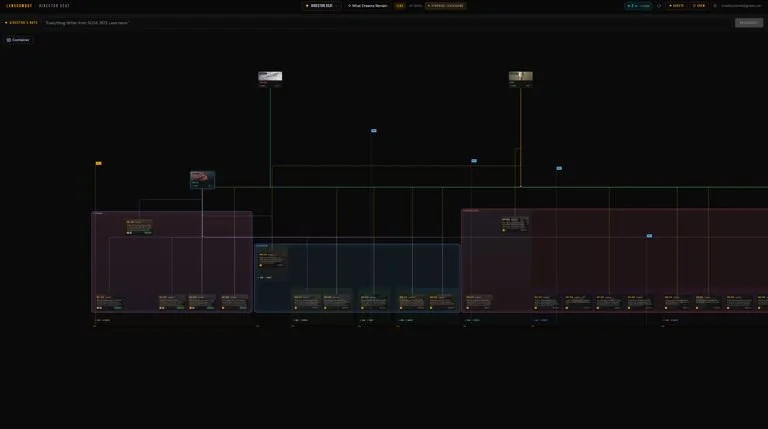
The thing that moves between people is the work, not messages about the work.
A note becomes a queue. When the director assigns a shot to a department, it appears in that department's board. Not in an inbox, not in a thread that scrolls away. The assignment and the shot are the same object, so there is nothing to transcribe and nothing to lose.
A lighting plot is data. The gaffer draws the plan view — fixtures, positions, aims — and it compiles into the shot's own fields. Which means a relamp reaches forty shots as one change rather than forty edits.
The cut reads back. The editor works in Resolve, as editors do and should. What they changed — trims, new takes, dropped shots — comes back into the record as a diff you can read shot by shot. The cut stops being a black box that post finds out about later.
Why it holds
Here is the design decision the whole thing rests on.
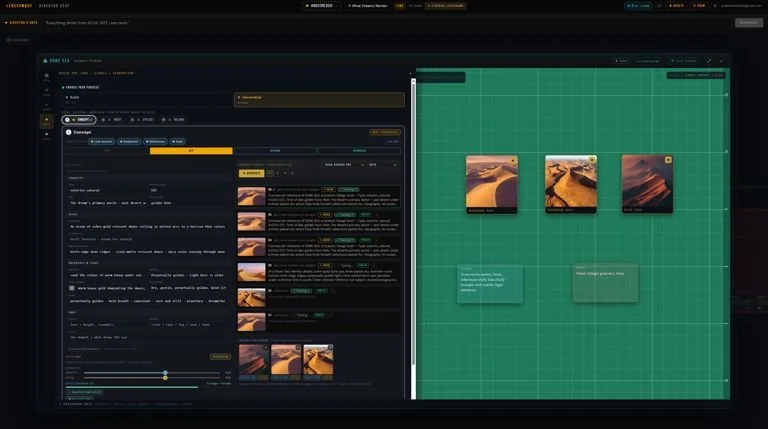
The record never stores a department's work. It stores where that work lives.
The breakdown stays in LCBE. The layout stays in PAL. The renders stay where they were made. Ask the record about a shot and it tells you where to look. There is never a second copy, so there is nothing to fall out of date.
It is a registry, not a warehouse.
That is the whole trick, and it is why a note from the director and a change from the editor can arrive in the same place without one overwriting the other. Systems that copy everything into themselves are the reason production software rots. This one refuses to.
Where it sits
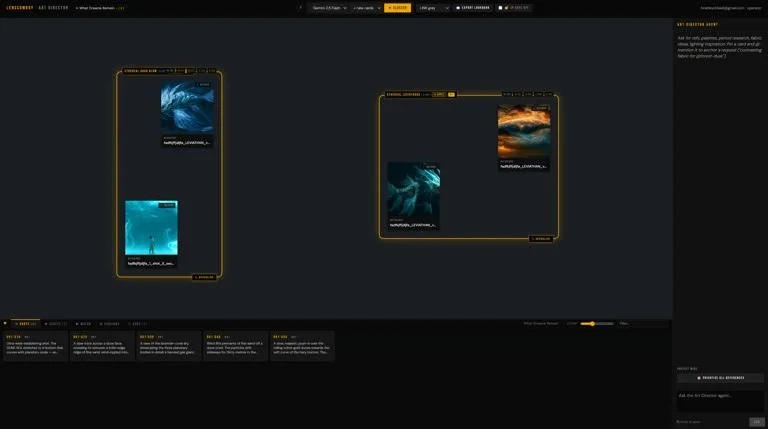
The Living Story is the convergence of five tools we already built, each of which did one job well.
LCBE breaks the script down. PAL blocks the shot in 3D. LINK generates and finishes it. Spectacle puts it in front of the client and brings the note back. Resolver hands the cut to the editor and reads the change back in.
The Living Story is what happens when they stop being five tools.
It sits on top of the pipeline you already have rather than replacing it, and it is included with Enterprise.
If you are running a production and the shot list has already started to disagree with itself, talk to us.